


Temporal Lift
Temporal Lift
A temporal lift aims to give the face a more dynamic and balanced appearance by enhancing the aesthetics of the outer part of the eyebrow and the area around the eyes. The procedure is planned with due regard to the overall anatomy of the face and the relationship between the eyebrows and eyes; the aim is not an exaggerated lift, but a natural and refined appearance of the upper face.
Contents
- What is a Temporal Lift?
- In Which Circumstances Is a Temporal Lift Recommended?
- What Techniques Are Available?
- How is the operation performed?
- How Long Do the Results Last?
- Where Do the Traces Remain, and How Visible Are They?
- Frequently Asked Questions
Type of anaesthesia:
General
Duration of the operation:
2 hours
Hospital Stay:
1 day
Stay in Istanbul:
5 days
Return to Life:
7 Days

What is a Temporal Lift?
A temporal lift is a procedure involving the vectorial lifting upwards and outwards of the deep tissues in the temporal region (the fascia over the temporal bone), the outer third of the eyebrow, and the outer edge of the eye (the lateral canthus). This procedure smooths out the crow’s feet lines around the eyes, lifts the outer end of the eyebrow and gives the eye a more defined, almond-shaped appearance.
In Which Circumstances Is a Temporal Lift Recommended?
- Low Eyebrow Tail: The outer part of the eyebrow drooping downwards, putting pressure on the eye and creating a tired expression.
- Crow’s Feet and Sagging of the Temporal Skin: Fine lines and accumulations of tissue becoming noticeable at the outer corner of the eye.
- Drooping of the Outer Corner of the Eye (Sad Eyes): A downward slant of the outer corner of the eye.
- Upper Eyelid Ptosis: The loosening of the skin in the temple region and its folding over the eyelid.
- Desire for a More Alarmed and Dynamic Gaze (Cat Eyes): The expectation among younger patients that the shape of their eyes will be made more attractive anatomically.
What Techniques Are Available?
Endoscopic Temporal Lift:
This technique involves making 2–3 cm micro-incisions in the scalp, inserting camera-equipped systems through them to release the deep fascia and lift it upwards in a vertical-diagonal direction. It leaves no scars and produces extremely long-lasting results.
Open / Deep-Plan Temporal Lift:
This technique, which involves reaching down to the deep supporting layer in the temporal region (SMAS/temporal fascia), is the preferred method for older patients with significant sagging.
Non-surgical Thread Lift Techniques:
It offers a temporary solution; however, as it does not promote tissue adaptation in the same way as surgical techniques, its effect is short-lived.
How is the operation performed?
The operation is carried out under general anaesthesia or sedation and lasts an average of 1.5–2 hours.
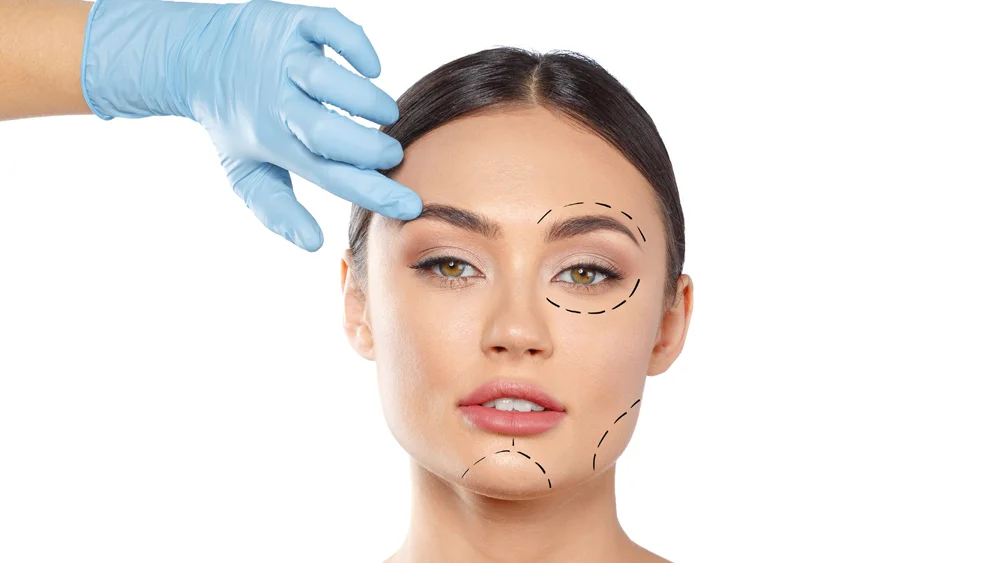
- Micro-incision Planning: The incisions are marked so that they remain entirely within the 2–3 cm of the scalp in the temporal region.
- Tissue Release: The deep and superficial tissues overlying the temporal fascia are carefully dissected from the periosteum and muscle fascia.
- Vectorial Lifting and Fixation: The tissues supporting the tail of the eyebrow and the outer corner of the eye are lifted upwards along vertical and diagonal axes, in accordance with the desired degree of lift and tension, and fixed to the deep fascia.
- Closure: The incision sites are closed using aesthetic sutures or surgical staples.

How Long Do the Results Last?
As the tissues are anatomically released and secured to strong fasciae during a surgical temporal lift, the results are permanent. The rejuvenating and lifting effect achieved remains effective for 7 to 10 years, depending on the individual’s ageing process.
Where Do the Traces Remain, and How Visible Are They?
- Completely Hidden Scars: As all the incisions are made within the scalp, no surgical scars are visible from the outside. The suture line remains unnoticeable even when the hair is pulled back.
- No Risk of Hair Loss: Thanks to micro-incisions and special suturing techniques that do not damage the hair follicles, there is no hair loss in the sutured area.


Frequently Asked Questions
How long does the recovery process take?
Mild swelling or bruising may occur around the temples and eyes during the first 3–5 days. The stitches or staples are removed within 7–10 days, and the patient can comfortably resume their daily social life. The sensation of excessive tightness felt during the first few weeks will subside as the tissues settle.
Can it be combined with eyelid surgery (blepharoplasty)?
Yes. In patients with excess skin on the upper eyelid, performing a temporal lift in conjunction with blepharoplasty provides a holistic and excellent rejuvenation of the eye area.
Will my face end up looking unnatural or with overly slanted features?
No. The angle and tension during the operation are planned according to the patient’s natural bone anatomy. Once the early-stage swelling has subsided, all that remains is a fresh and attractive facial expression.
Patient Experiences
Hear about the surgical experiences of our patients in their own words.